Tute
6. Test
Build fast
Real learning only starts when someone else uses your thing. We explore the importance of building fast, testing Early, learning Faster (Before You Fall in Love).

Allie Walters
Founder of Unstuck, Brand Meadow & Senior Product Designer
Users don’t need perfection
This is the part where things usually get uncomfortable — and that’s a good sign.
Once you’ve got something clickable, even if it’s scrappy, the instinct is to keep polishing. Adjust spacing. Rewrite copy. Add just one more thing. I’ve been there. That urge usually means you’re avoiding feedback.
Real learning only starts when someone else uses your thing.
I try to test as soon as I can explain the idea without apologising. That’s my personal rule. If I’m saying, “Ignore this bit” or “This isn’t finished,” it’s probably ready. Users don’t need perfection. They need clarity.
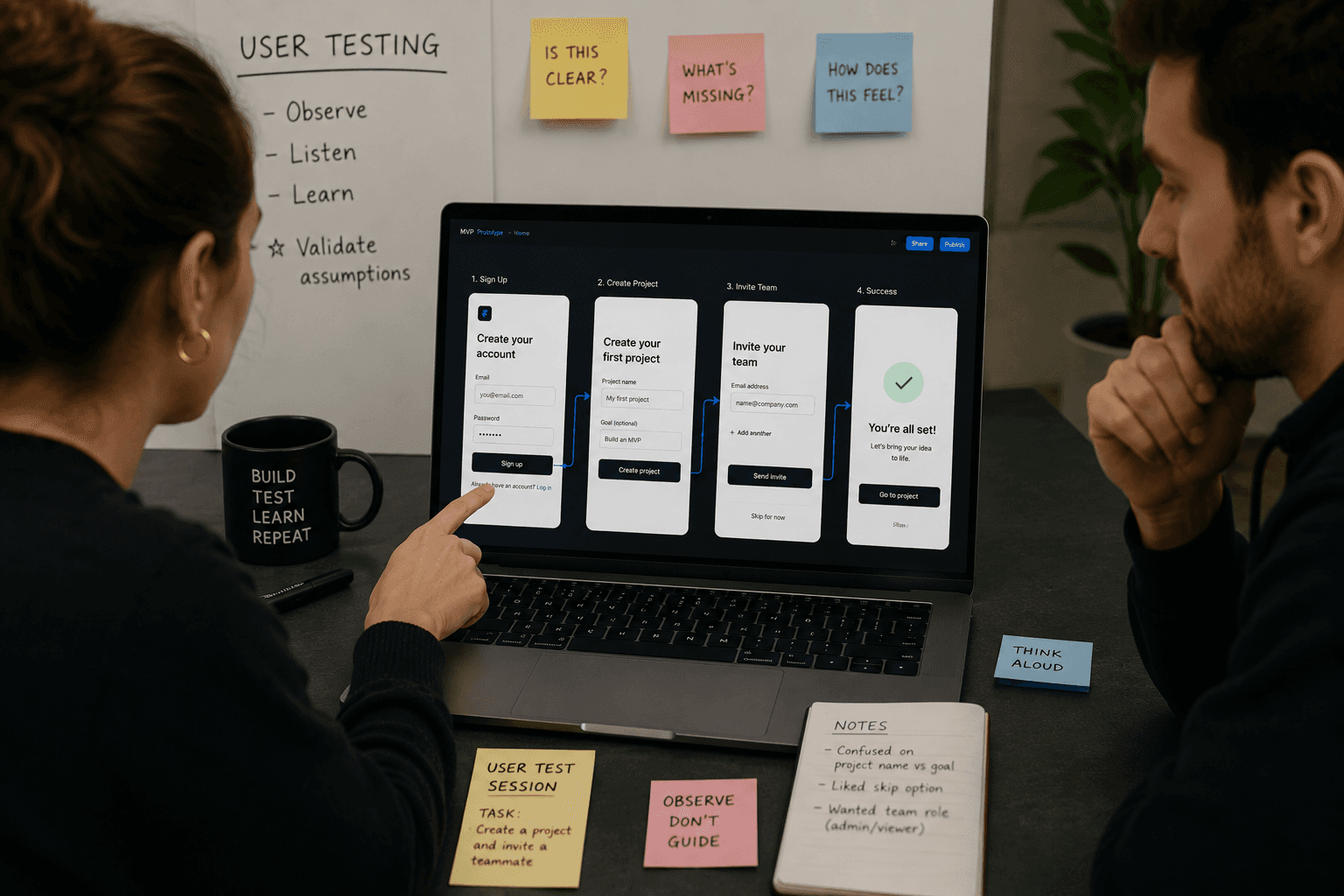
Early testing doesn’t need fancy setups. Some of the best insights I’ve ever had came from:
Watching someone share their screen on a call
Sending a Figma link and saying “talk out loud”
Sitting next to someone and saying nothing (this is hard but powerful)
The key is to shut up and watch.
People will tell you what they think you want to hear if you ask the wrong questions. Instead of “Do you like it?” I ask:
“What do you think this does?”
“What would you click next?”
“What’s confusing here?”
And then I listen for hesitation. Pauses. Backtracking. Those moments matter more than opinions.
One mistake I made early on was testing too much at once. I’d show a whole flow and get overwhelmed by feedback. Now I test one thing at a time. One screen. One action. One assumption.
You’re not validating the whole product. You’re validating a belief.
Another lesson: don’t defend your work. Ever. If you feel the urge to explain, that’s the product failing — not the user. Make a note and fix it later.
Testing early saves time in ways you don’t realise until later. Every awkward moment you catch now is hours saved in build, redesign, or worse — rebuilding after launch.
And emotionally? Testing early keeps you flexible. If you wait too long, your identity gets wrapped up in the solution. Then feedback feels personal. Early on, it just feels useful.
Fast tests. Small changes. Clear learning.
That’s how momentum builds.
"Real learning only starts when someone else uses your thing. Early testing doesn’t need fancy setups. The key is to shut up and watch. Fast tests. Small changes. Clear learning."